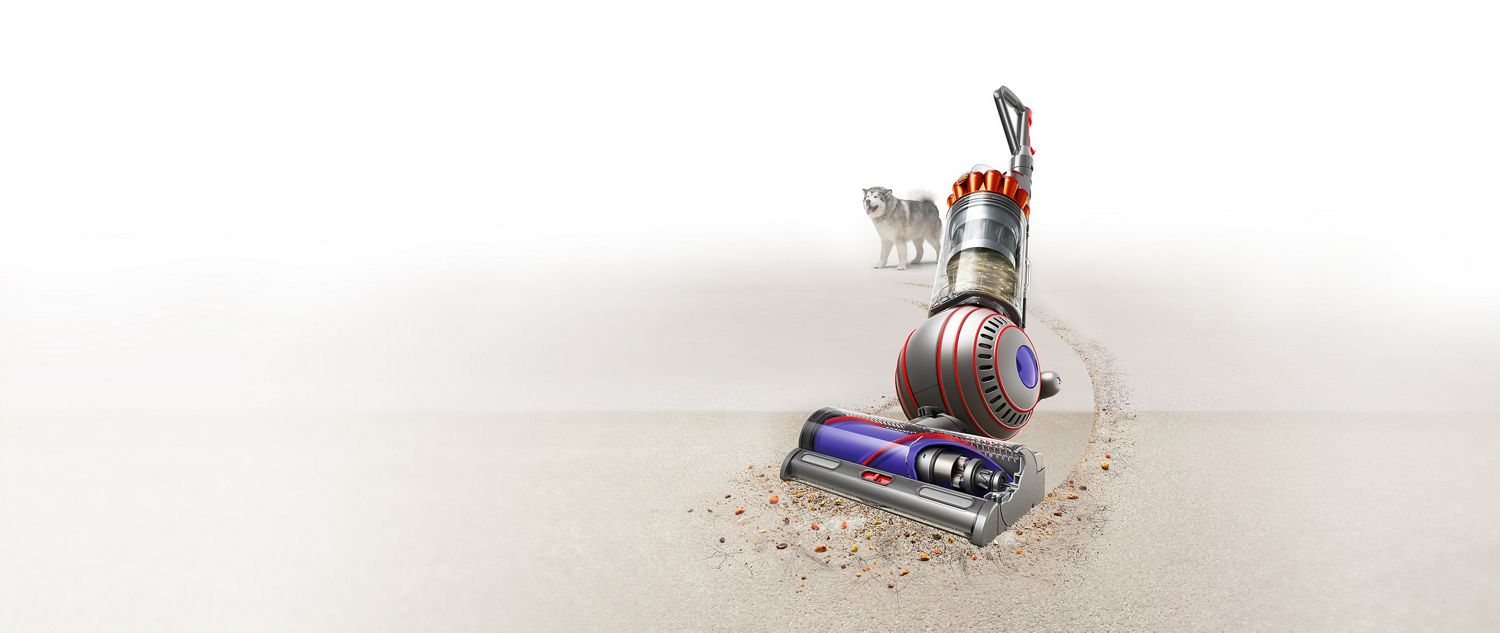

Dyson de-tangling technology
Cleans pet hair wherever it gets, and removes tangled pet hair. Engineered for homes with pets.
-
Motorbar™ cleaner head
Sucks up pet hair fast. Hair removal vanes automatically clear wrapped hair as it cleans.
-
Tangle-free turbine tool
Counter-rotating heads with brushes remove hair from carpets, cars and upholstery. No more tangles.
Frequently asked questions
To clean the filter of your Dyson upright vacuum:
- First turn your vacuum off and unplug it.
- Locate the filter, remove it from your machine, and wash it under cold running water to remove all dirt and debris.
- Allow the filter to air dry completely before reinserting it back into the vacuum.
Unplug the vacuum and detach the bin by pressing the release button. Hold the bin over your rubbish bin and press the red button to release the bottom lid and empty the contents.
Whether cylinder or upright vacuums are better will depend on your needs and preferences.
Cylinder vacuums are generally better for cleaning stairs, upholstery, and hard-to-reach areas, as they're more versatile, easy to carry and have a longer hose.
Upright vacuums are better for cleaning large carpeted areas quickly and efficiently. They have a wider cleaning path and often have more powerful motors.
An upright vacuum cleaner is a type of vacuum that's designed to stand upright and be pushed along the floor while cleaning.
Typically, it will have a motorised brush bar at the base to agitate carpet fibres and loosen dirt and debris, which is then sucked into the bin.
Upright vacuums are often larger and heavier than other types of vacuums, but they're also powerful and efficient for cleaning larger areas.
There are several upright vacuums on the market that are known for powerful suction.
Our most powerful corded uprights at the time of writing are the Dyson Ball Animal vacuums, which can generate up to 290 Air Watts of powerful suction with our pioneering Radial Root Cyclone™ technology.
An upright vacuum provides continuous corded power and is well suited to longer or deeper whole-home cleaning sessions. A cordless vacuum prioritises portability, allowing you to move easily between rooms and clean stairs, furniture and other areas without being restricted by a power cable.
Yes. Upright vacuum cleaners can be particularly effective for deep cleaning carpets because the motorised cleaner head works directly across the floor to remove dust, dirt and hair from carpet fibres.
Dyson upright vacuums are engineered for powerful carpet cleaning. Selected models use a Motorbar™ cleaner head with de-tangling technology, helping remove ground-in dirt and automatically clear wrapped hair from the brush bar as you clean.
Yes. Upright vacuum cleaners can be effective for homes with pets because their motorised cleaner heads help lift hair and ground-in dirt from carpet fibres. When choosing one, look for powerful suction and a de-tangling cleaner head to reduce hair wrapping around the brush bar. Dyson upright vacuums use de-tangling cleaner heads that automatically help clear wrapped hair as you clean.
Yes. Upright vacuum cleaners can be a good choice for larger homes, particularly where longer cleaning sessions, carpets and deep floor cleaning are priorities. Their corded design provides continuous power without needing to stop to recharge.
Dyson upright vacuums are designed for whole-home cleaning, with Ball™ technology for manoeuvring around furniture and extended hose-and-cord reach for cleaning beyond the floor. Selected Dyson upright models provide more than 14 metres of combined reach, helping you clean areas such as stairs without continually repositioning the machine.




*Pick up tested in accordance with IEC 62885-2: 2021 Cl5.4. Tested against corded vacuums marketed with de-tangling cleaner heads sold from Jan 21 to Dec 21.