PRESS RELEASE
Interdental cleaning: what it is and why it matters
London, England - July 24, 2026
We all know we should clean between our teeth. But many of us don’t thoroughly. In fact, two in three people skip flossing regularly – and it shows. Food debris and plaque build up in the tight spaces your toothbrush can’t reach, contributing to bleeding gums, bad breath and long-term oral health issues.
Interdental cleaning addresses this exact problem. It focuses on the spaces between teeth, where plaque bacteria thrive if left undisturbed. And it’s often the missing step in a daily routine that otherwise feels complete.
Most importantly, it’s one of the simplest ways to improve your oral health – if you understand how to do it properly.
What is interdental cleaning?
Interdental cleaning is the process of removing food particles and plaque from the spaces between your teeth, areas that brushing alone often misses.
These gaps may be small, but they’re significant:
- They trap food easily.
- They’re harder to reach with a toothbrush.
- They create the perfect environment for bacteria to grow.
If plaque isn’t removed, it can harden to form tartar. This can further irritate gums, leading to bleeding gums and persistent bad breath. Brushing cleans the surfaces you can see, while interdental cleaning tackles what you can’t.
Why brushing alone isn’t enough
Regular brushing is essential, but it has limits. Even with good technique, the bristles of a toothbrush cannot reach tightly packed interdental spaces.
That’s why dentists commonly recommend cleaning between your teeth as part of a complete routine, using tools designed to reach where brushing can’t.
Flossing
Flossing uses either a thin string or a controlled stream of fluid to move between each tooth, lifting away plaque and trapped food.
It’s designed for tight spaces, where precision matters most. With the right technique, it can help remove build-up before it has time to settle – though, many people find it takes practice to use consistently and effectively.
Interdental brushes
Interdental brushes are small brushes designed to fit between teeth and gently remove debris.
They’re often used for slightly wider gaps, offering a more direct way to clean between teeth. Finding the right size is key, as a proper fit helps ensure effective cleaning without discomfort.
But interdental cleaning continues to be overlooked
Despite these options, many people still struggle to maintain consistent interdental cleaning habits. Time, technique and comfort all play a role, which is why these spaces are often the most overlooked.
Why many people don’t clean between their teeth
Brushing is quick, familiar and built into daily life. Cleaning between your teeth is different – it asks for more attention, so it’s easier to skip. There are a few common things that make it harder to stick to:
- It doesn’t feel urgent: Plaque between teeth isn’t always visible, so it’s easy to underestimate its impact until symptoms appear.
- It’s not part of the routine: Brushing has a set place in your day. Interdental cleaning often doesn’t, so it becomes optional.
- It can feel uncomfortable: Early signs like bleeding gums or sensitivity can make people stop, even though they’re often a sign that plaque is already present.
- Time and effort add up: When routines feel long or complicated, people simplify them. Interdental cleaning is usually the first thing to go.
The result is a simple but important gap: the areas between teeth are often left untreated, giving plaque more time to build where it matters most.
The link between interdental cleaning, plaque and gum health
Plaque is a sticky film of bacteria that forms constantly on your teeth. When it collects between teeth, it can:
- Irritate the gums.
- Cause inflammation and bleeding gums.
- Contribute to bad breath.
- Increase the risk of longer-term gum issues.
This explains why someone can brush twice a day and still experience oral health problems. The missing piece is often the spaces in between.
Interdental cleaning disrupts plaque where it starts, helping to protect both teeth and gums.
A different approach to interdental cleaning
What if interdental cleaning didn’t feel like an extra step?
Dyson engineers started with a simple observation: most people don’t floss regularly. So, they rethought the routine.
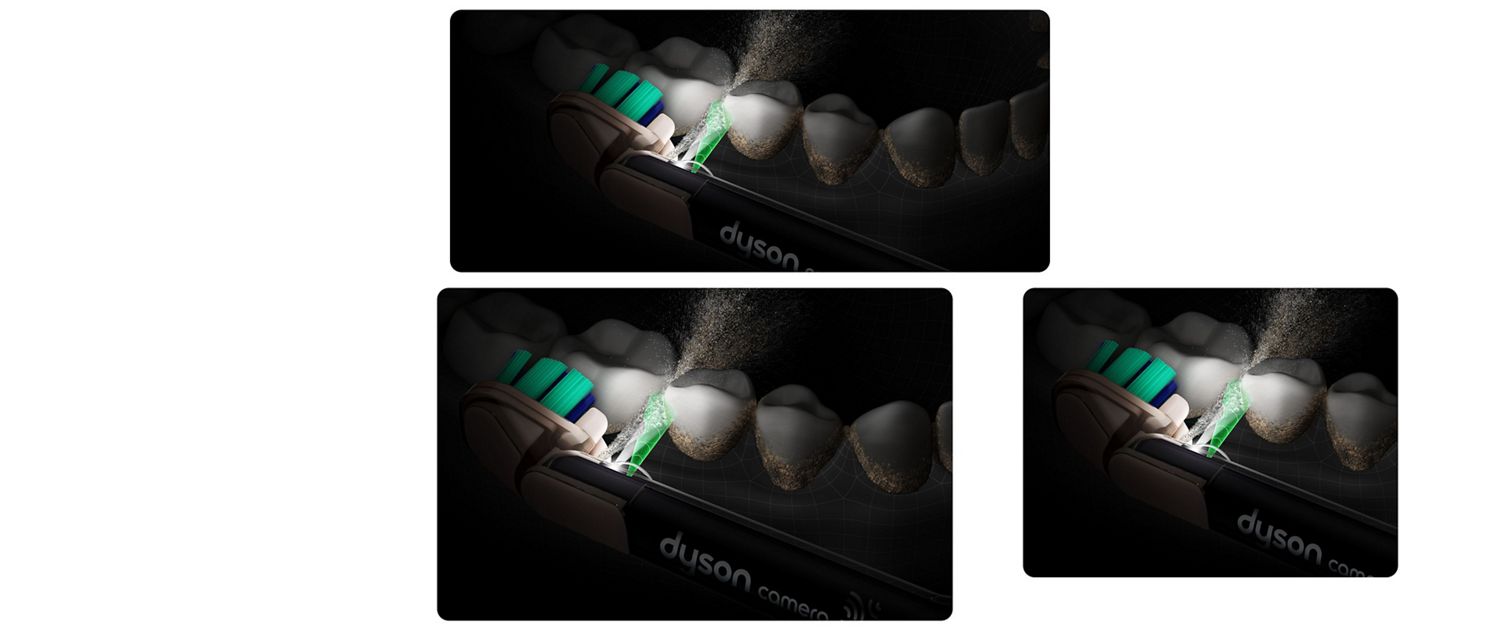
The Dyson CameraJet™ electric toothbrush with Gap Optical Targeting™ is designed to integrate brushing, flossing and mouth rinsing into a single, continuous action. Instead of switching tools, it works as you brush, targeting the spaces between your teeth automatically.
Here’s how it supports interdental cleaning:
- A built-in camera identifies the gaps between teeth.
- When a gap is detected, a conical jet releases a burst of Dyson Low-foaming mouth rinse to clean the space.
- This helps remove more plaque between teeth than brushing alone.1
It’s a simple idea: clean where it matters, without adding extra steps. And importantly, it keeps the experience practical – helping more people actually do it, not just know they should.
Why consistency matters more than perfection
The most effective oral care routine is the one you stick to.
Interdental cleaning doesn’t need to be complicated. But it does need to be consistent. Skipping it – even occasionally – allows plaque to rebuild quickly in the spaces between your teeth.
Whether you prefer flossing, interdental brushes, or an integrated approach, the goal is the same:
- Remove plaque regularly.
- Protect your gums.
- Maintain fresh breath.
What this means for your daily routine
If you’re already brushing twice a day, you’re on the right track. But to support complete oral health, consider how interdental cleaning fits into your routine.
Ask yourself:
- Are you cleaning between your teeth every day?
- Are you free from bleeding gums or bad breath?
- Does your current routine feel easy to maintain?
If the answer is no, it may be time to rethink your approach.
Explore a different way to clean between your teeth
Interdental cleaning is vital, but it doesn’t have to be complicated. Discover how the Dyson CameraJet™ electric toothbrush with Gap Optical Targeting™ helps you brush, floss and rinse in one step, and supports a more complete daily routine.
¹ More effective at removing plaque between teeth in Brush and Auto-jet, Deep clean mode vs. a manual toothbrush, in lab-based tests.