Why Britain needs more 'doers' and fewer 'talkers'
By James Dyson | Published: 26 December 2025
This essay is published to coincide with James Dyson's guest edit of the BBC Radio 4 Today programme on 26 December 2025.
Britain can prosper again if it returns to being a nation of doers – that’s the theme of my guest edit of the Today programme, which was broadcast on BBC Radio 4 this morning and is now on BBC Sounds.
Having made the programme – and thoroughly enjoyed the process – I’m even more convinced that we should reject what the doomsayers say about Britain. Our decline isn’t inevitable, or beyond our control. There is so much raw potential in our country, which can be realised – if only we embrace aspiration and inventiveness.
I hope Radio 4’s listeners will take away a message: that we should be a nation that values the doers – and use government policy to back those who want to make their own success.
Napoleon once dismissed Britain as a “nation of shopkeepers”, these days we might better be described as a “nation of family businesses”, since they employ more than half of private sector workers, and account for nine in 10 private businesses.
As I explained to Nick Robinson in the interview at the end of the programme, my fear is that British family businesses face being wiped out in a generation. The brutally destructive new taxes imposed on them - still hitting the vast majority despite the latest meaningless U-turn - spell disaster for the economy over the medium term. The policy-makers responsible haven’t appreciated how ruinous their approach is – or how much investment it is snuffing out.
Amid the focus on inheritance taxes on farms and the government's U-turn, this point has been lost: the tax looms over all British family businesses, the employers of most private sector workers. They will be forced to sell so they can pay the tax. In this scenario, why would anyone risk everything to start a business. Entrepreneurship killed at a stroke.
As much as I am an optimist – one who believes that if we back the doers, they will create the wealth which will benefit all of us – I am also aware of an opposite potential outcome. If government policy is used to knock back the doers, and attack wealth creators – exemplified by family businesses – the declinists may be proved right after all.
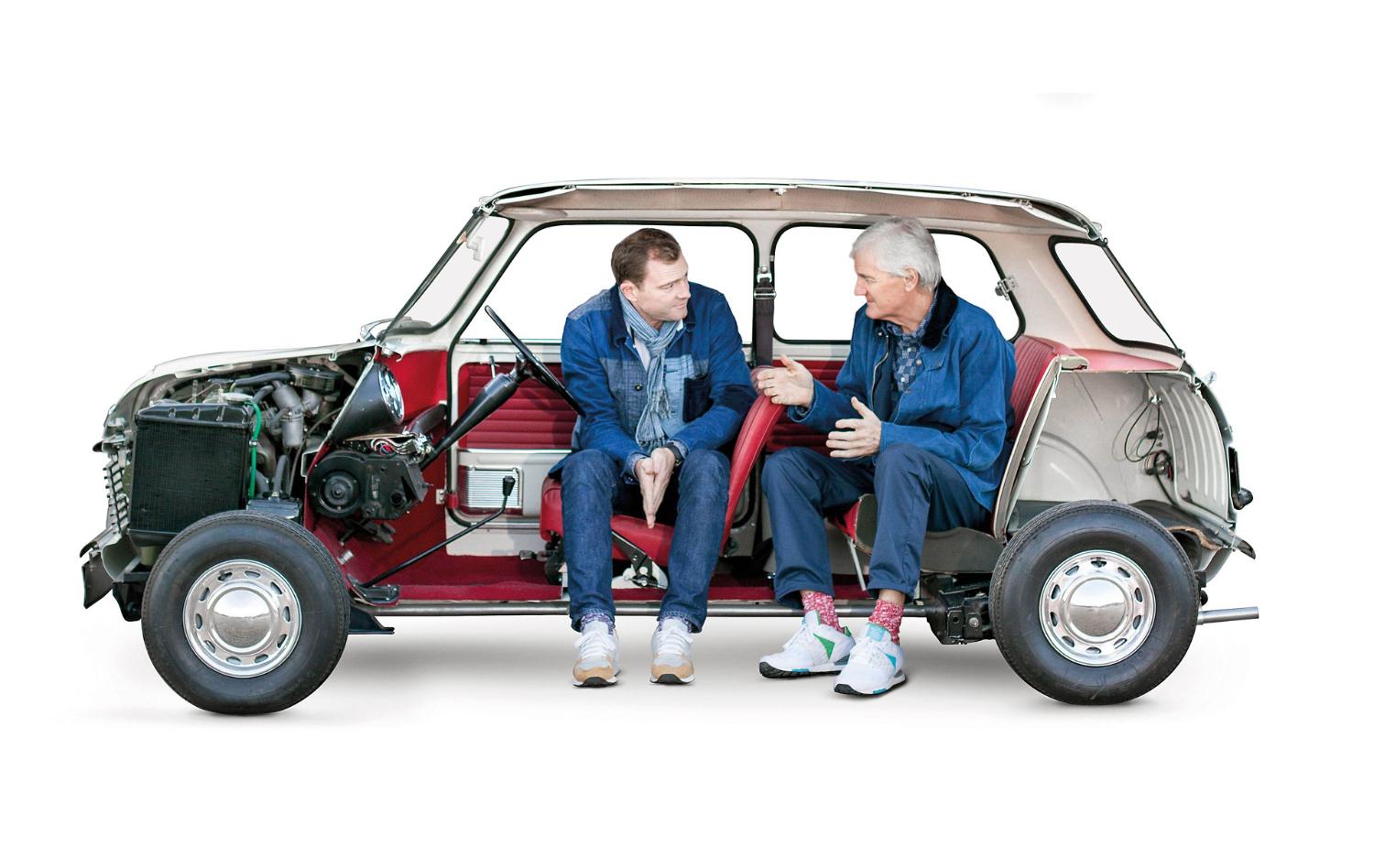
With my son Jake Dyson, Dyson's Chief Engineer.
Guest editing the Today programme allowed me to talk to incredible doers who are focused on some of the key problems of our age, which I explore in more detail below. They are bringing F1 speeds to the race to cure dementia; they are modernising agriculture to boost food security to turn farming into a successful export business; they are trying to keep a family business afloat as it faces the impact of the Government’s new death taxes; and they are teaching the problem-solvers of tomorrow in the classroom and the R&D laboratory, including at Dyson.
I also had a chance to explore a passion – long-distance running – as we looked at the effect it has on our bodies, especially as we grow older; and I examined the subject of failure, which is a vital part of the creative and experimental process, for engineers but all innovators too.
Regaining Britain's inventive streak
When countries become wealthy, they often forget what made them successful in the first place. In the case of Britain, we are rather snooty about engineering and manufacturing and very complacent about global competition. We look down our noses at people who make things, here or in other countries, valuing jobs in the services sector more highly.
Some might say: “Hang on, it’s all very well James Dyson telling Britain to support doers and makers, but he took his company’s manufacturing to Malaysia in 2002 and then set up a global headquarters in Singapore in 2019. That’s hardly a vote of confidence in the UK is it?”
The reality is Dyson now employs about 2,000 people in the UK, which is about four times the number of jobs lost in 2002, when our manufacturing moved to Malaysia. But critics overlook the reasons why our manufacturing had to move.
In 2002, Dyson was quickly expanding around the world. We were already making around 500,000 machines a year in Malmesbury and needed to open a new, larger, factory to enter the US which is the largest vacuum cleaner market in the world.
We were already importing almost all our components to the UK – even the three pin plugs – from Asia. And the only British supplier we had – which happened to make hoses – ruled out a factory expansion due to the high levels of risk it involved.
Since we were expanding so fast, and had outgrown our purpose-built factory, we had to quickly find alternative ready-made factory, which we found in Malaysia. Meanwhile we produced plans for a further factory in Malmesbury and applied for planning permission over a period of two years. This was refused, so all further production took place where we could expand in Singapore and Malaysia.
We have now expanded 50-fold – 25 million machines a year – that is only possible in Asia, where new factories can be built – start to finish – in four months. There is no way we would have been able to have expanded at such a rate in the UK!
Manufacturing companies need to be very close to their suppliers for speed of technology development, and Asia is the home of consumer electronics. Dyson is a manufacturing company, and it too needed to be close to its suppliers. Furthermore, our big growth markets are in Asia too. It would be arrogant to think that Dyson could be successful without being there.
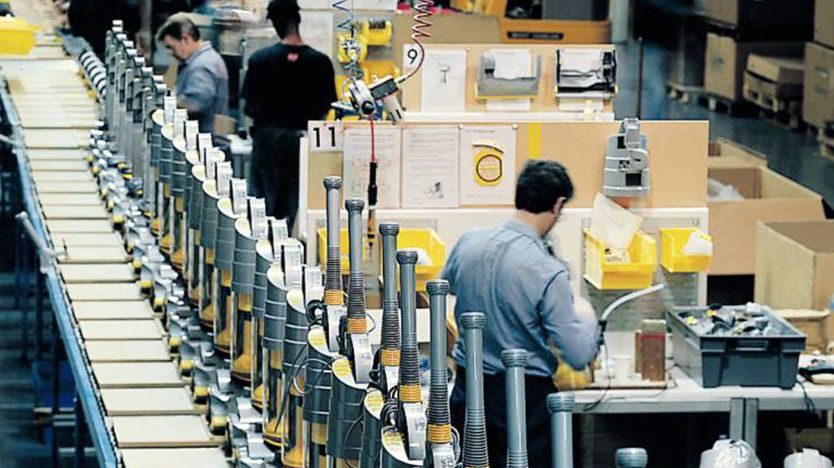
Our first production line for DC01, at Bumpers Farm in Chippenham, 1993.
In 2019 we established a headquarters in Singapore. Evidently not for cost purposes, as a few like to claim, since Singapore regularly appears in the top five places in the world for cost of living and average salaries are around 25% higher!
Nevertheless, since 2002 Dyson has invested heavily in the UK and employs around 2,000 people. Not only has our R&D Campus dramatically expanded, but we have also built a new British university, the Dyson Institute, with 160 undergraduate engineers who are paid a salary while studying for their degrees and working on real projects from day one. We have new degree awarding powers, our own academic staff, and are on the path to full university status.
And just for the record, we pay a lot of tax here too – £1bn in the past 10 years directly, plus another £1bn of VAT generated on the sale of our products. So, we’ve done our bit to keep the flame of aspiration alight. If that flame is going to burn more brightly, we need a change in attitudes and political priorities. Education is also going to be key.
For the Today programme, as well as touring our R&D labs and meeting some Dyson Institute graduates, we visited a Year 6 class at the wonderful Malmesbury C of E Primary School, who were in the middle of an engineering workshop led by Dyson engineers. Young people are natural and passionate problem solvers, but that spirit tends to get stamped out of us as we get older. Private business can help here: I’m trying to support that state primary school by funding a £6m STEAM centre (STEM plus the arts). It has been a battle to get the go-ahead, with the last Education Secretary having to intervene directly to allow the donation.
We need a curriculum that inspires the doers. The arts are important (I’m an arts graduate myself) but science, technology, engineering and maths need far more investment and emphasis. The key is focusing on problem-solving and careers in engineering, science and technology.
.jpg?$responsive$)
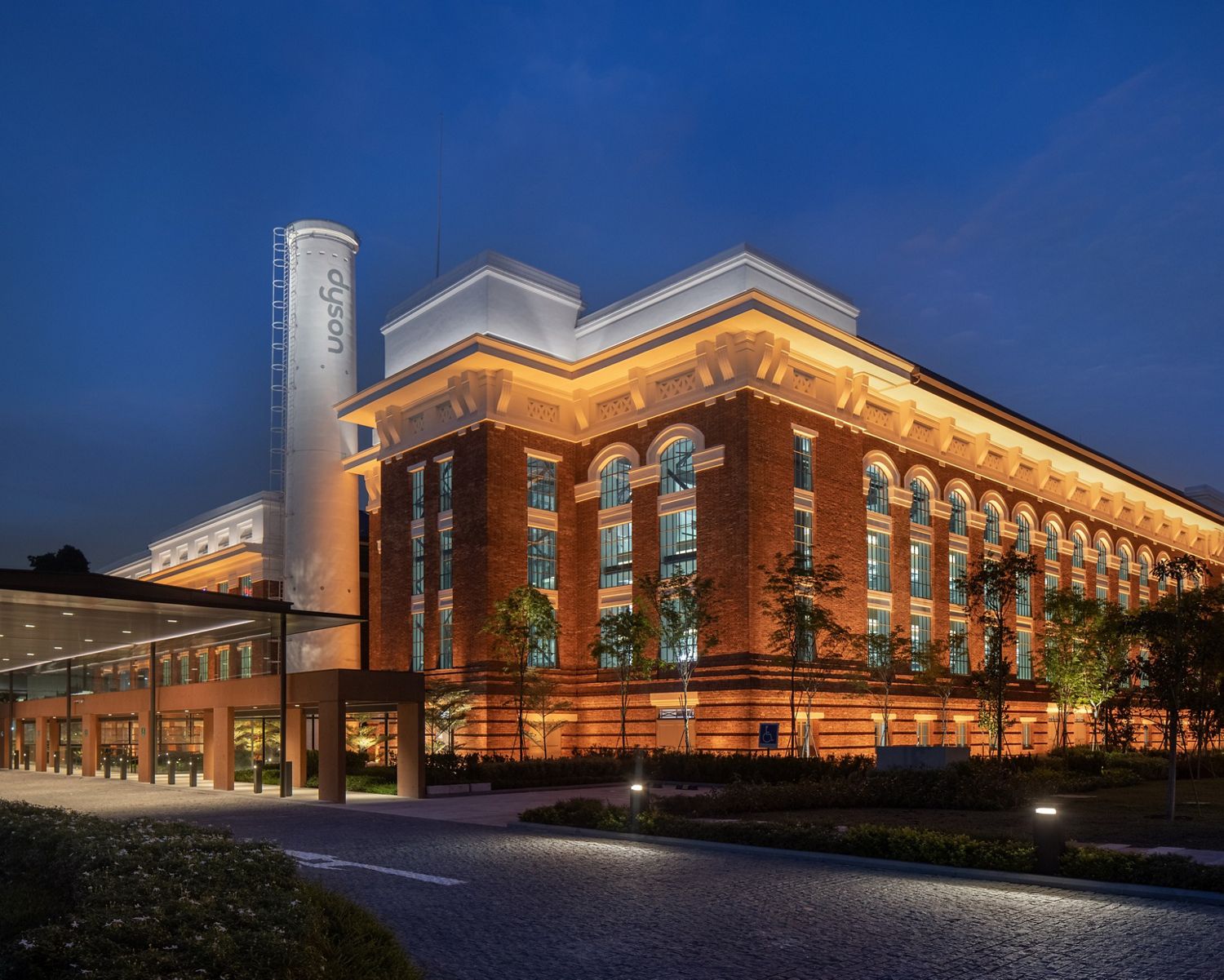
Left to right: Dyson's Global HQ at St. James Power Station in Singapore, Dyson's R&D Campus in Malmesbury.
A cure for dementia
Dementia is a devastating disease and one in three of us will contract it. It is a problem that needs solving, quickly, and requires people to take a different approach.
Jackie Stewart, the famous racing driver, founded Race Against Dementia to bring Formula 1 speeds into medical research and I support one of his research Fellows, Dr Claire Durrant, both with funding and access to our Malmesbury R&D labs, their state-of-the-art equipment, and Dyson engineers.
Claire and her team are undertaking groundbreaking research at the University of Edinburgh, approaching the problem from a new and exciting angle. Rather than experiment on rats or mice, she is the first person to experiment on real human brain tissue – the leftovers from tumour surgery, donated in awe-inspiring, altruistic, acts by patients going through the hardest times in their lives.
She applies the toxic chemicals that are thought to cause Alzheimer’s disease, to the healthy living brain tissue in petri dishes, and using incredibly powerful microscopes observe what’s happening in real time. The Today programme goes into the operating theatre and witnesses the brain tissue extraction.
The James Dyson Foundation provides Claire with funding, but also access to equipment and expertise. For more than a decade, Dyson has been looking at the chemistry of battery cells, and what goes on inside them at a sub-atomic level. This research provides a fresh perspective on brain tissue, which Claire has observed and drawn upon. It is this cross-pollination of ideas that most excites me.
This is groundbreaking research and I am hugely optimistic that Claire, a fantastic example of a doer, can solve this terrible affliction – at the fastest possible pace.
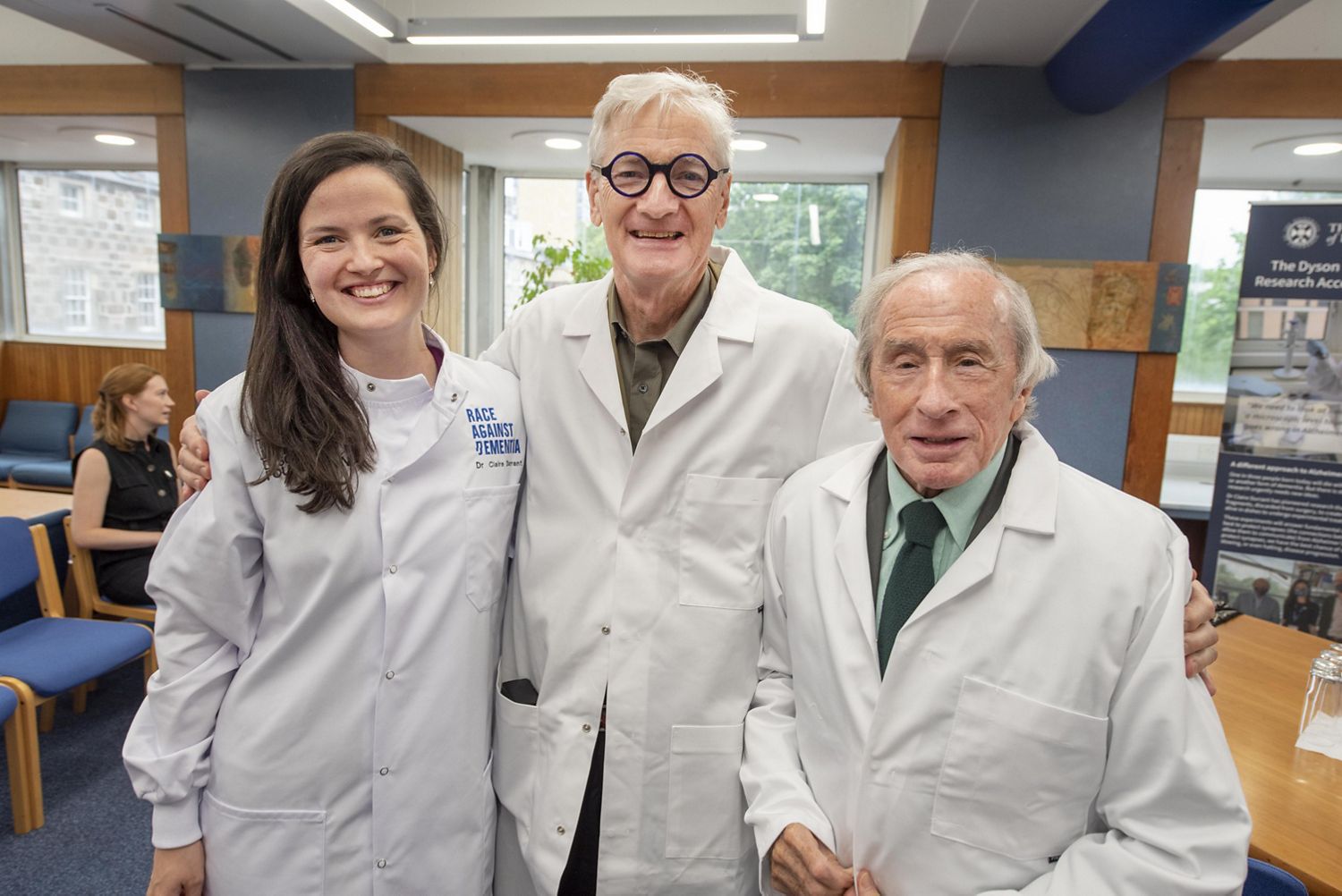
With Dr. Claire Durrant, Race Against Dementia Dyson Fellow (left) and Jackie Stewart, Founder of Race Against Dementia (right).
Food security and farming
Far from being a quaint and nostalgic pastime, farming is brutally hard work and full of risk. It is very hard to earn even a basic living as a farmer, but feeding our nation with good, tasty, nutritious food is not optional. Efficient, high-technology food production and food security is a vital ingredient for the nation’s health and its economy.
We saw how quickly supply chains can unravel and shelves become empty during the pandemic. Yet the Government ignores food security and vindictively attacks our farmers, sparing only the very smallest. The imposition of unpayable inheritance tax on these agricultural doers makes a grave situation worse, while extinguishing the British family farm – and what do they think will replace them?
In contrast, the Netherlands is a fascinating case study of where farming is valued – it is a country that went from famine, after the war, to being a net exporter of food and the “Silicon Valley” of farming technology – thanks to long-term investment in modern farming methods. They are leading the way in growing fruit and vegetables under glass, which is what I am doing with strawberries in Lincolnshire, and I wanted the BBC to see it for themselves.
I’m sometimes accused of going into farming to avoid inheritance tax, which is utter rubbish. I’m interested in growing food – bringing an engineer’s mindset of doing more with less to improve yields in harmony with nature.
Dyson Farming is a top five food producer in the UK, producing 1,250 tonnes of strawberries, 40,000 tonnes of wheat, 9,000 tonnes of spring barley and 12,000 tonnes of potatoes every year, among other crops. I’ve invested £120m (in addition to buying the land) in soil improvement, farming technology, hedging and walling, green energy production, and in rural employment to create a commercially viable, long-term, sustainable farming business at scale.
Much like in the Netherlands, Dyson strawberries now grow all year round, under glass, using the excess heat from our anaerobic digester which produces green electricity for the equivalent of 10,000 homes. It’s a very efficient circular system, with the output of the digester going back on the fields as organic fertiliser to improve crop yields. So, unlike that tasteless fruit imported from overseas, which involves huge amounts of air miles, Dyson strawberries are sustainable.
Sadly, I didn’t bring my strawberries into the Today Programme studio, for fear they would breach the BBC’s product placement rules, but you can find them in M&S and Ocado if you want to try nutritious fruit over Christmas and in the New Year. They are packed with Vitamin C and polyphenols – powerful anti-oxidants that are anti-inflammatory and great for heart and brain health.
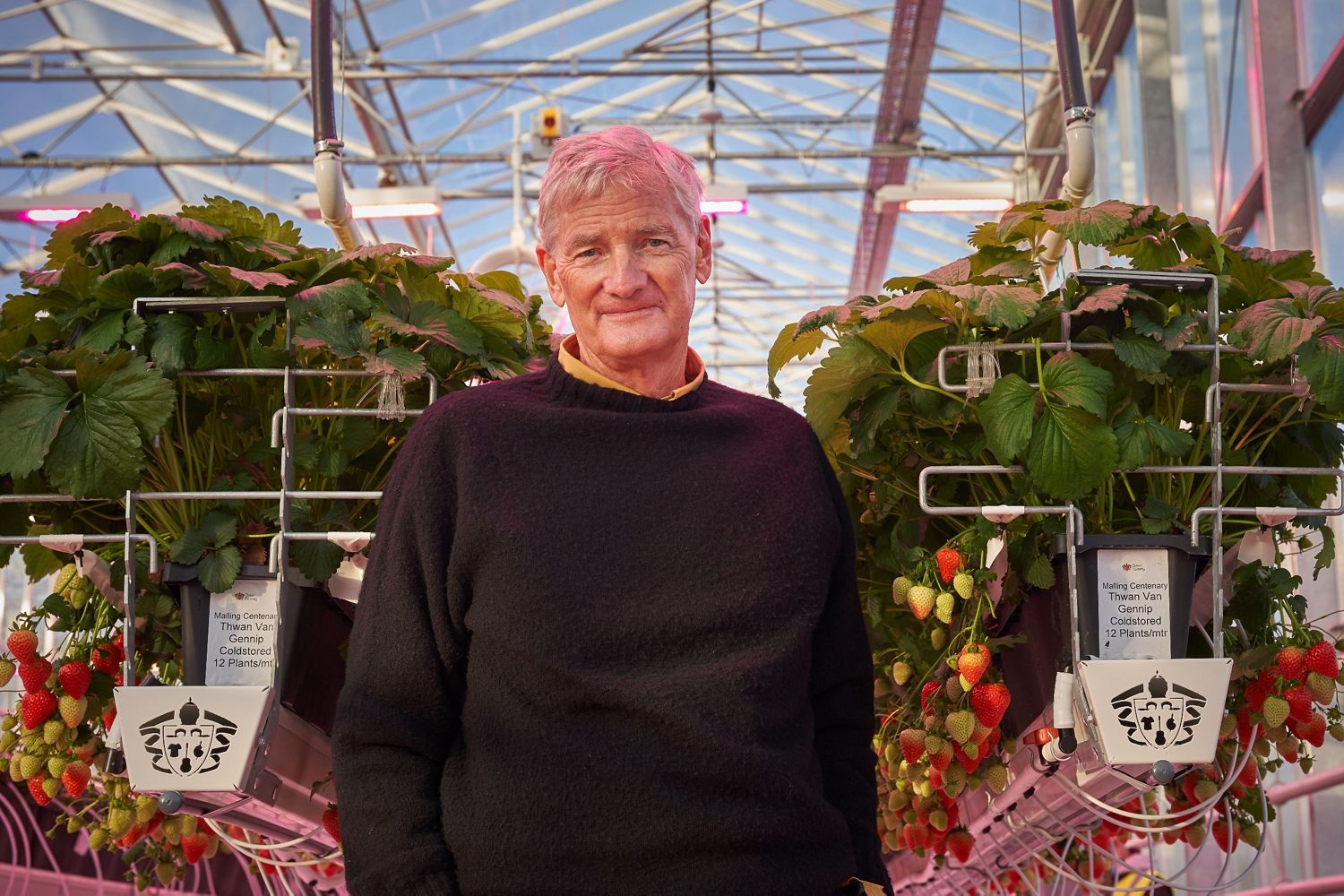
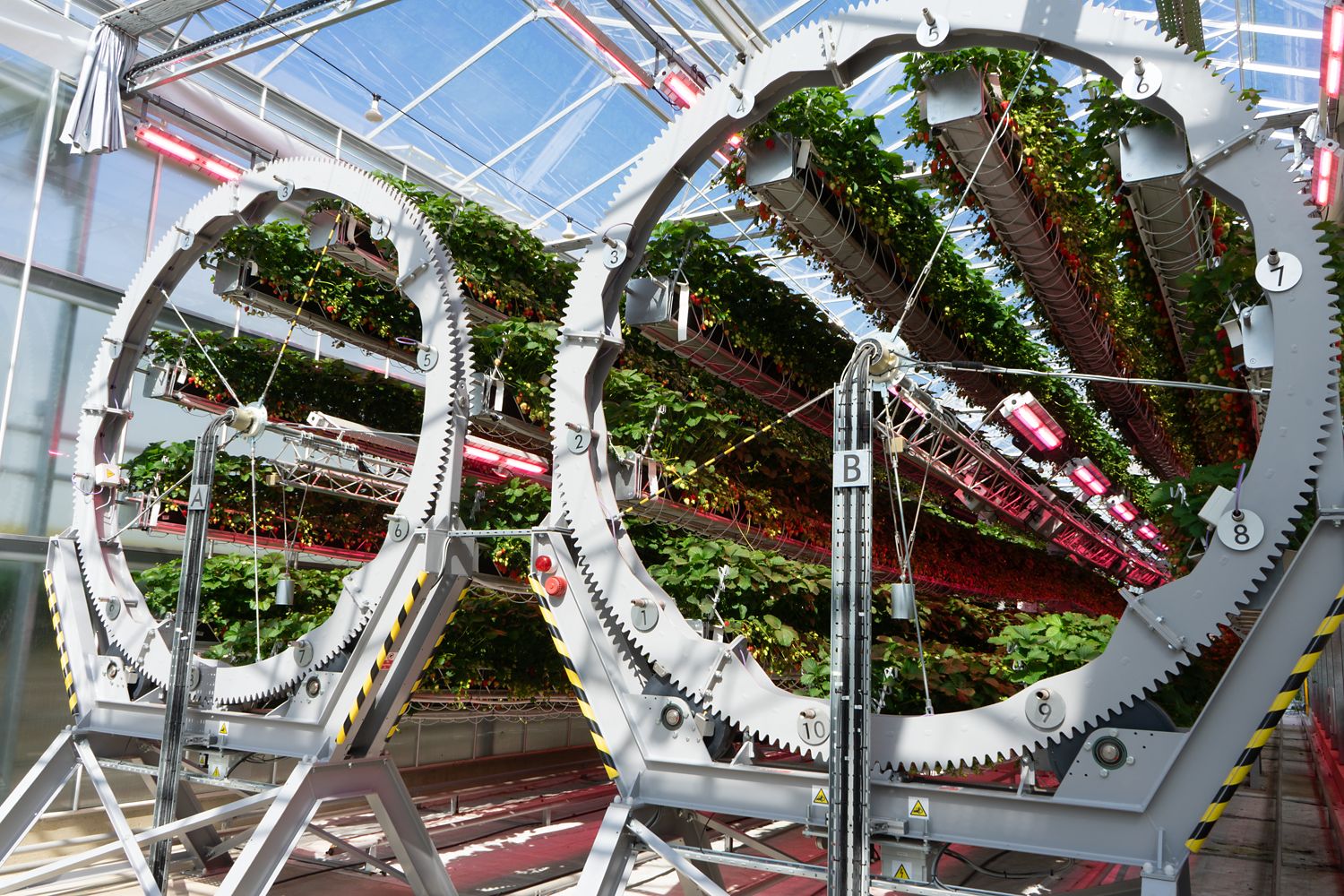
On the right: Dyson Farming's Hybrid Vertical Growing System, designed by Dyson engineers.
Family businesses
Napoleon called us a “nation of shopkeepers” but actually 9 out of 10 private sector firms in Britain are family firms. They employ more than half of all private sector employees. So, we are in fact a “nation of family businesses”! But they are under threat.
I care deeply about family businesses because I have one myself and see the good that they do. They employ 16 million people, contribute over £400bn in taxes, provide a vital source of long-term investment and economic growth while supporting their local communities. They are amongst the country’s most productive and important doers but they are now being hit with a wrecking ball.
The Government has singled out family firms with a 20 per cent inheritance tax. What’s more, when you include the additional tax payable on the dividend a family will have to raise to meet the inheritance tax bill, they will end up paying closer to 40 per cent of the theoretical value of the business. This is not based on assets, but rather a multiple of earnings. They do not have these kinds of resources, yet have to pay it as each generation dies.
No other type of firm will pay this tax, whether it’s one owned by a foreigner, private equity or is a public company listed on the stock market. In one fell swoop, the Government has put British family firms into an existential crisis. No business can pay this tax and survive, so the new taxes sound the death knell for family businesses.
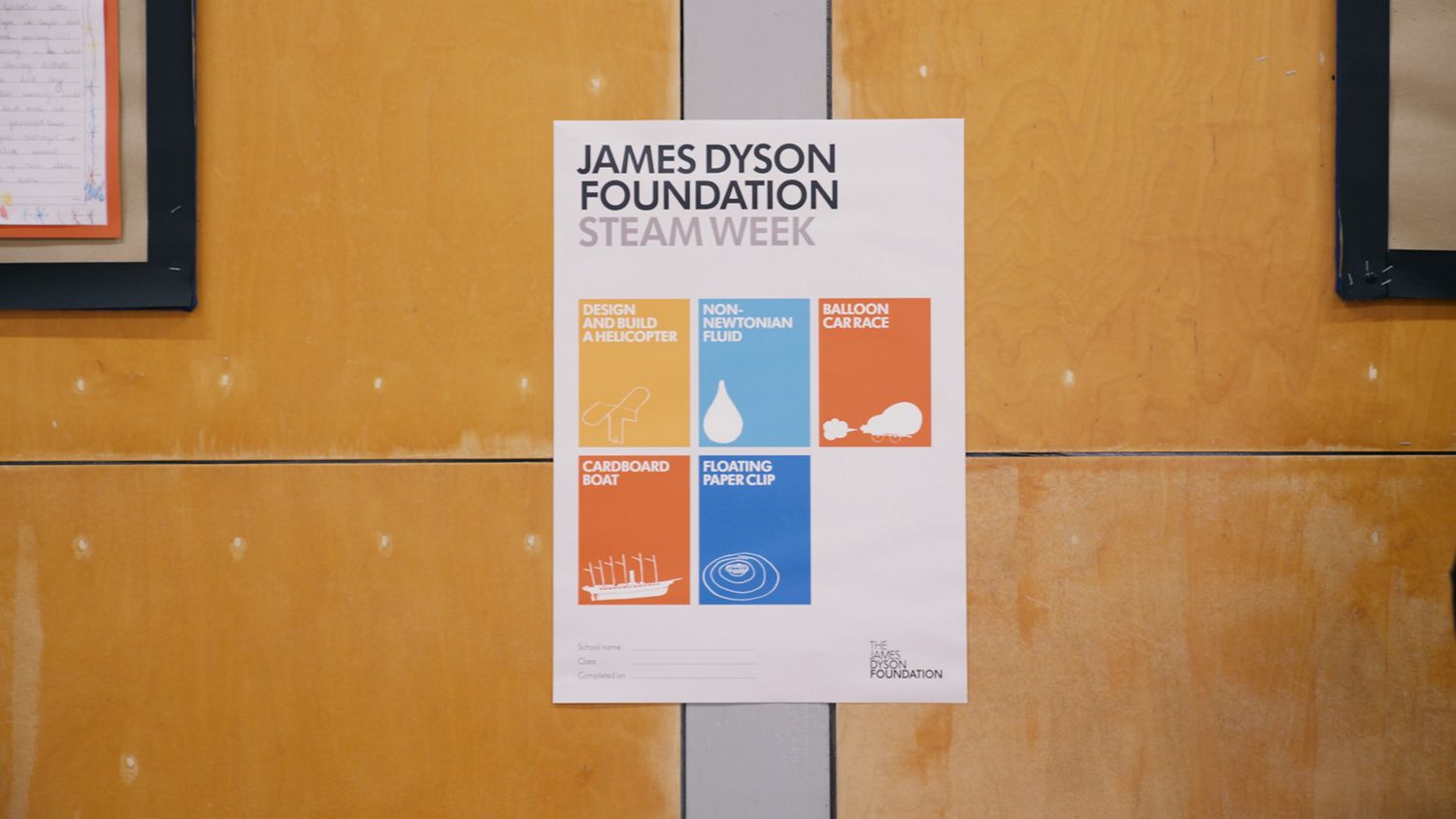
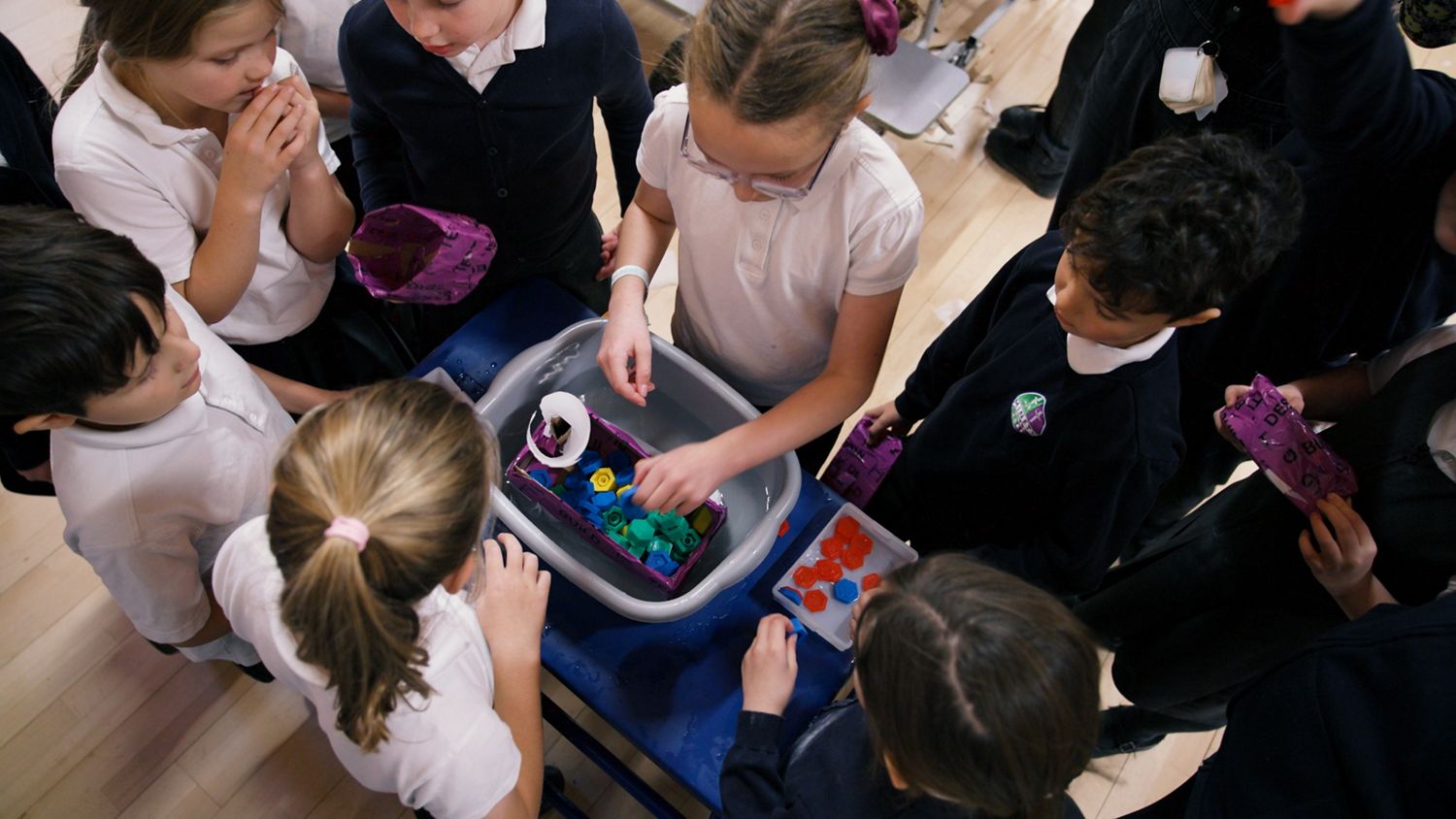
Supporting the local community through the James Dyson Foundation.
It's hard to fathom what Labour has against hardworking families who take risks, invest, and create jobs. Why does Labour attack our nation’s Family Businesses yet leave alone Private Equity and Public Companies? It doesn’t even help the exchequer. It’s vindictive and an example of how some politicians fail to grasp the importance of doers as the engine of ideas, jobs, exports and the nation’s growth.
Instead of punishing those who create jobs and contribute to our national wealth, why not cheer them on? Why not encourage aspirational people, including inventors, who start and grow businesses at great personal risk? We would all be better off, including the Government.
Winston Churchill said: “Some regard private enterprise as a predatory tiger to be shot. Others look on it as a cow they can milk. Only a handful see it for what it really is – the strong and willing horse that pulls the whole cart along.”
The Government forgets this truth at its peril – they are not only milking the cow, but they have cut its legs off too. William Lees-Jones, Managing Director of a highly successful family brewery in the North West of England, JW Lees, was interviewed on the programme and explained the impact for his business.
The importance of failure with Anna Wintour
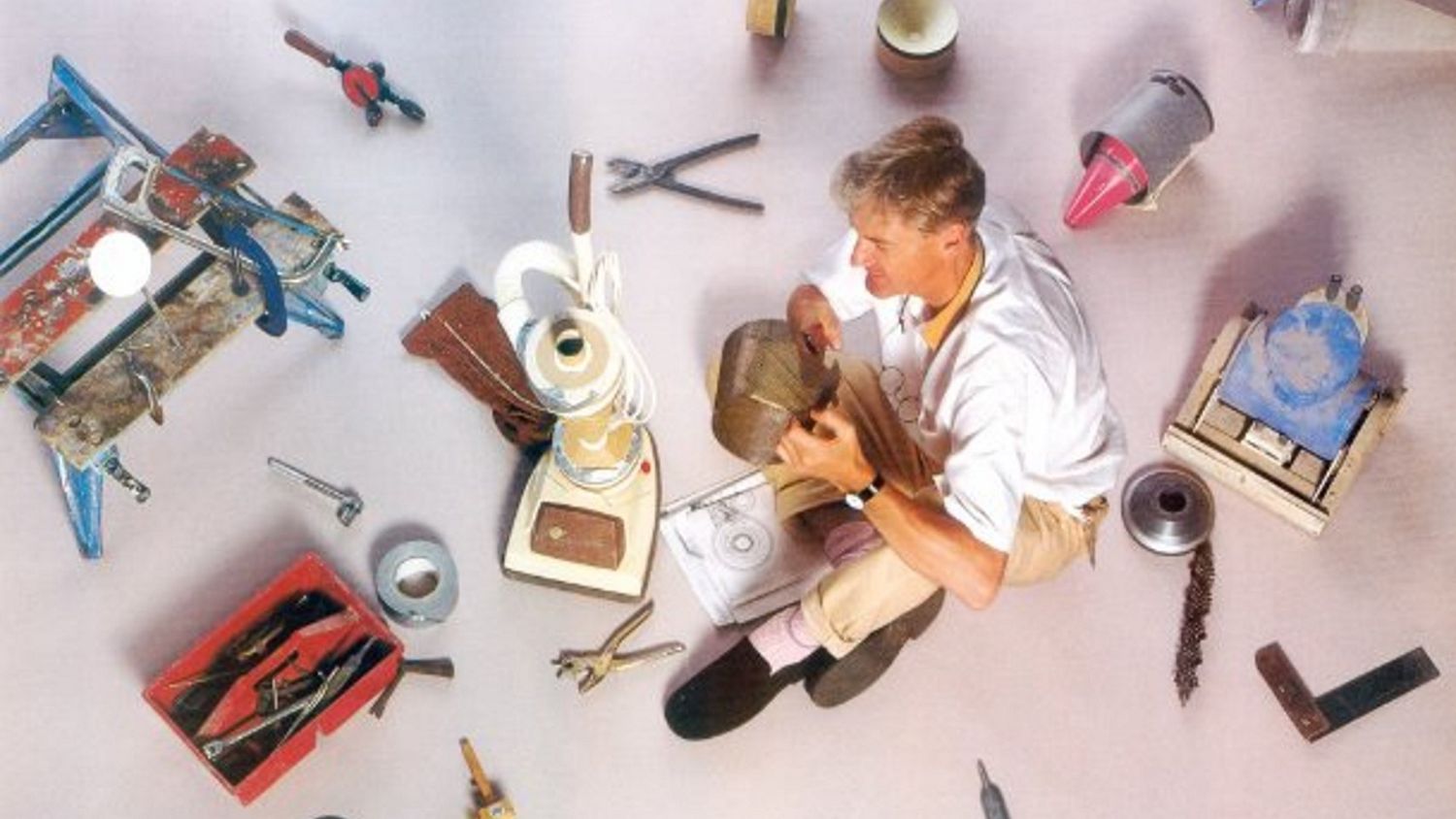
It has become fashionable these days to talk about embracing failure and using it positively, but I’ve been doing it for decades starting with the 5,126 prototypes – otherwise known as failures – that I went through before I successfully developed my bagless vacuum cleaner that didn’t lose suction.
No doer can be successful without failing. If you never fail, you aren’t experimenting or taking risks. And if you aren’t taking risks, you will never make progress. This story for the Today programme is about the value of perseverance, overcoming failure, and dogged hard work. Often, some idea of innate talent is seen as a prerequisite for success, but it’s important to explore how success is achieved, at least in part, because of past failures, not in spite of them.
My story is one of constant failure but also determination and perseverance. I was joined by Anna Wintour to talk about embracing failure in order to make change. She talks enthusiastically about those, in the worlds of fashion and journalism, that have overcome failure to achieve great things.
Inspirational teachers
If we are going to be a nation of doers, then that starts at school and we need teachers to show us how. The best teachers can inspire in the most surprising ways. For this item in the show, I invited some of my friends to write a letter of appreciation to a teacher who had inspired them at school.
Joanna Lumley, Eric Idle, Richard E Grant and Stella McCartney read their letters and explained how their lives were changed by a teacher or mentor.
My own parents were teachers, and I am forever grateful for the generosity my school, Gresham’s in Norfolk, showed me when my father – who was Head of Classics at the school – died when I was nine. Logie Bruce-Lockhart, the headmaster, allowed me to continue my studies free. Giving me the most valuable but unusual advice as I departed for Art School.
It is such acts that change lives, even though we don’t necessarily realise it at the time. This story is about those life-changing people and is a chance to celebrate and thank them.
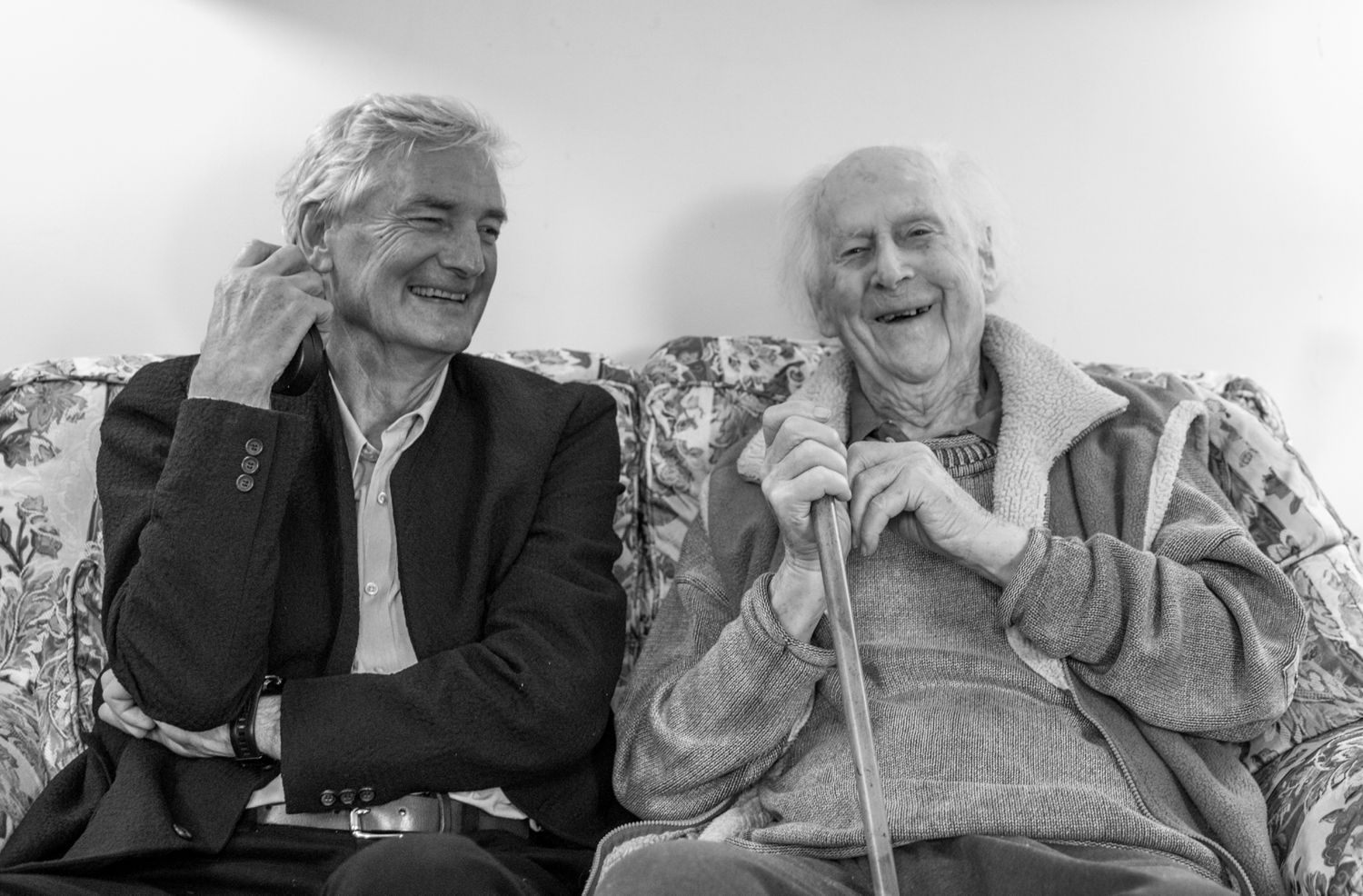
With Logie Bruce-Lockhart.
Running
Finally, running was the first thing I knew I was good at, and something that I had taught myself as a schoolboy – I still run today. I wanted to find out how good for you it really is and I was told that it helps you live longer, so it’s a good one for the list of New Year’s resolutions!
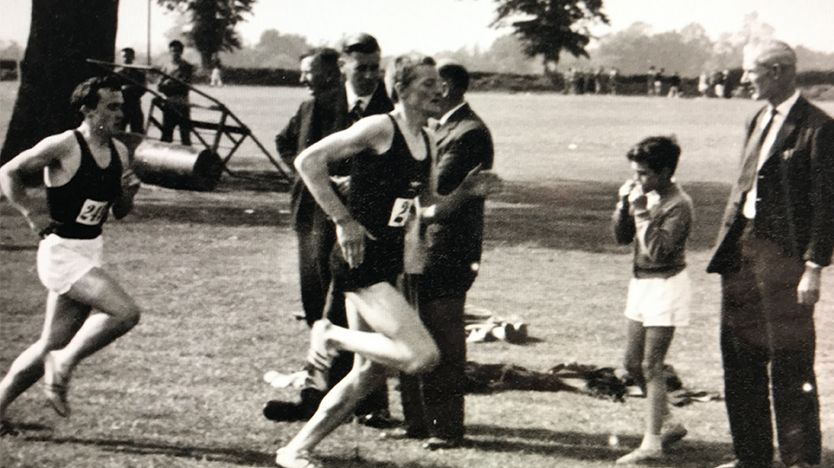
Competing at the Eastern County Championships at Diss.
Press Contacts
-
Press Office
Email: press.office@dyson.com
-